Gaming App KYC in India: Document Safety Checklist for Players
Before sharing Aadhaar, PAN, or DigiLocker documents with a gaming app, use this India-focused KYC checklist to check safety, privacy, and red flags.
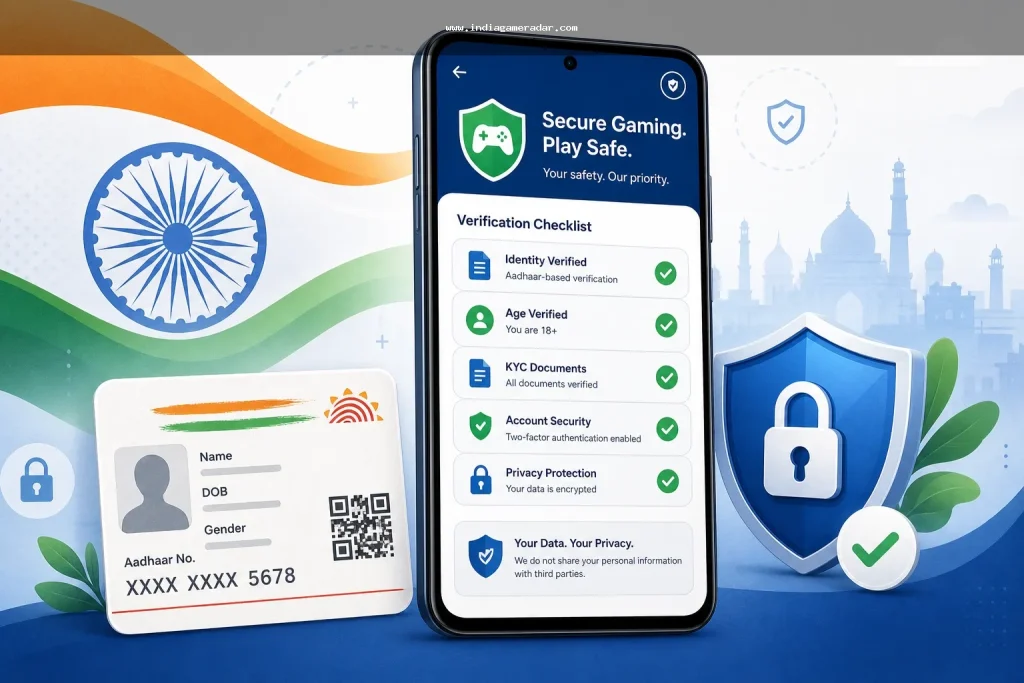
KYC requests are common around real-money gaming accounts, withdrawals, high-value wallet activity, and age or identity checks. The risk for players is that a document request can look routine even when the app, support channel, or payment trail has not been checked properly.
This checklist is for Indian players deciding whether to share Aadhaar, PAN, DigiLocker documents, bank details, or screenshots with a gaming app. It is not legal advice, and India Game Radar does not operate gaming services, process deposits or withdrawals, manage player accounts, or verify documents for any app.
First confirm why the app wants KYC
Before uploading anything, read the app’s current terms, withdrawal rules, privacy policy, and account verification screen. A serious KYC flow should explain what document is needed, why it is needed, how it will be reviewed, and what happens if the document is rejected.
- Check whether the request appears inside the official app or website, not only through a WhatsApp, Telegram, SMS, or email conversation.
- Match the app name, domain, support address, and payment account against the brand information you used when signing up.
- Ask whether the document request is connected to a withdrawal, responsible-play limit, age check, tax record, or payment review.
- Do not upload extra documents just because a support agent asks informally. The request should match the app’s written policy.
If you are still deciding whether an operator deserves your trust, start with our gaming brand sign-up checklist before sending identity files.
Use the least risky document route available
Aadhaar and PAN are sensitive identifiers. If an app accepts a safer form, prefer that over sharing a full, reusable image in an open chat. UIDAI describes masked Aadhaar as showing only the last four digits, with the first eight digits hidden. If the app accepts masked Aadhaar for the specific check, that can reduce exposure.
DigiLocker is an official Government of India digital document wallet for access, sharing, and verification of documents. When a platform offers a genuine DigiLocker based flow, review the consent screen carefully and share only what the transaction requires.
- Do not send a full Aadhaar number, PAN image, selfie video, or bank statement through public comments or unverified support handles.
- Check whether the upload page uses HTTPS and belongs to the same app or a named verification provider disclosed by the app.
- Watermark document images when the app permits it, for example with the app name and date, so the copy is harder to reuse elsewhere.
- Keep screenshots of the KYC request, uploaded document type, timestamp, and final approval or rejection message.
Payment checks matter before document checks
A KYC request is not proof that a gaming app is safe. Scams can ask for documents too. Before adding money or waiting on a withdrawal, confirm that payment instructions are consistent and that UPI or bank transfer details do not suddenly change outside the app. Our UPI payment safety checklist explains what to verify before approving a payment.
Be especially cautious when a support agent asks for a UPI PIN, OTP, remote-screen access, card CVV, or a small test payment to release winnings. Those are not normal KYC checks.
Red flags before you upload documents
- The app will not show a privacy policy, company name, grievance contact, or withdrawal terms.
- The KYC request arrives only after you win, but the app never mentioned verification before deposits.
- Support keeps asking for new documents without a written rejection reason.
- The requested document does not match the stated purpose, such as asking for a full bank statement for a simple age check.
- The app claims KYC approval guarantees winnings, legal access, or withdrawal success. It does not.
What to do if something feels wrong
Stop sending new files until the app gives a clear written reason. Save transaction IDs, support replies, screenshots, and the exact app or website URL. If you suspect financial fraud, identity misuse, phishing, or account takeover, use the National Cyber Crime Reporting Portal at cybercrime.gov.in and contact your bank or payment provider quickly.
For broader context on what India-focused players should check before using real-money apps, read our online gaming rules checklist. State rules, product categories, and platform policies can change, so treat KYC as one part of a wider safety review, not a green light by itself.
Sources checked
- UIDAI guidance on masked Aadhaar.
- DigiLocker official description of digital document access, sharing, and verification.
- National Cyber Crime Reporting Portal for suspected online fraud or cybercrime reporting.
Not necessarily. Some apps ask for identity checks before withdrawals, age checks, payment reviews, or account-risk reviews, but players should check the current app terms and India-specific rules before assuming the same process applies everywhere.
Use masked Aadhaar only when the app or verification provider accepts it for that check. UIDAI describes masked Aadhaar as hiding the first eight digits and showing only the last four digits.
Avoid sending sensitive identity documents through informal chat channels unless the operator can prove that this is its official secure process. Prefer the app or a disclosed verification provider with a clear upload flow.
Save evidence, stop sending new files, contact the operator and payment provider, and report suspected cybercrime or financial fraud through official channels such as the National Cyber Crime Reporting Portal.
Written by
Nisha Rao
Payments and Safety Editor
Nisha Rao covers payment notes, KYC guidance, account-safety topics, app usability, and responsible gaming context. She focuses on helping readers understand public information without treating gaming as income or financial advice.
- Expertise
- UPI and wallet notes, KYC explainers, app safety checks, responsible gaming tools, and reader correction review.
- Review scope
- Reviews payment guidance, KYC notes, safety language, responsible-use sections, and correction evidence.