Gaming App Self-Exclusion in India: Cooling-Off and Support Checklist
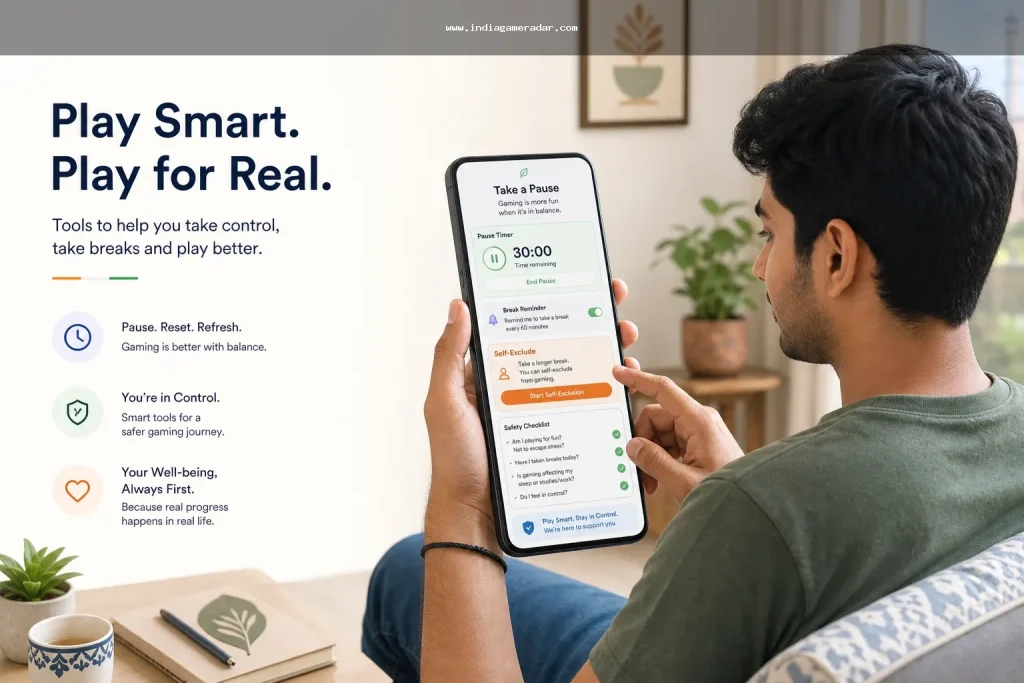
A self-exclusion request is not a dramatic last step. For many players, it is a practical control to use when limits, reminders, or short breaks are no longer enough. If a gaming app in India offers self-exclusion, cooling-off, deposit limits, or session limits, review those tools before play feels urgent, not only after a problem has already escalated.
This checklist is for players and families comparing public information. India Game Radar is an independent information site. We do not accept deposits, process withdrawals, manage player accounts, provide access to real-money gaming, or claim to have tested every app support flow. Use the current app terms, your state context, and qualified support where needed.
When a Pause Is Worth Taking
Use a cooling-off or self-exclusion option when gaming starts to override a limit you already set. Warning signs include repeated top-ups after deciding to stop, chasing losses, hiding play from family, using borrowed money, ignoring work or study, or feeling unable to close the app after a bad session. A shorter time-out can help when you need a break. A longer self-exclusion period may fit better when the pattern keeps returning.
The All India Gaming Federation describes responsible-gaming practices such as setting limits, time-out facilities, clear risk information, and self-exclusion. It frames self-exclusion as a process where a user can temporarily or permanently exclude themselves from gaming, with steps taken to prevent participation in pay-to-play formats after opting in. That is useful context, but it does not prove that a specific app gives you the same control or applies it in the same way.

Check the Tool Before You Tap
Before choosing a self-exclusion or cooling-off option, slow down and read the screen. Check whether the action is temporary or permanent, whether it covers one game or the full account, whether it blocks paid contests, whether it affects pending withdrawals, and whether support can reverse it. If the app only offers reminders or voluntary limits, do not treat that as full exclusion.
Keep evidence. Save screenshots of the screen before submission, the selected period, the confirmation message, the time and date, support ticket numbers, emails, wallet status, and any pending withdrawal or refund reference. If your concern is a payment or withdrawal problem rather than a play-control problem, use our gaming app withdrawal delay checklist and keep payment records separate.
Do Not Turn It Into a Legal Shortcut
India’s online-gaming rules and state-level restrictions are moving parts. A responsible-play tool does not make an app legal in every place, does not prove a game is safe, and does not guarantee that winnings, refunds, or withdrawals will be handled in your favor. The Press Information Bureau has acknowledged online gaming risks and potential harms such as addiction in government communications, while MeitY-hosted online-gaming law documents provide broader regulatory context. For player decisions, that means you should keep claims narrow and check the current official terms instead of relying on promotional wording.
If you are deciding whether to use a new platform, start with the basics in our gaming brand sign-up checklist. Look for the operator identity, age rules, restricted-state language, wallet conditions, complaint routes, responsible-play controls, and privacy terms before you add money or identity documents.
A Step-by-Step Self-Exclusion Checklist
- Decide the goal first: a short break, a longer stop, or a permanent block.
- Check whether the option applies to deposits, paid contests, free games, marketing messages, and login access.
- Read what happens to wallet balance, pending withdrawals, tickets, rewards, bonus credits, and unused entries.
- Capture screenshots before and after the request.
- Submit through the official app or website only, not through a copied APK, social message, or search ad.
- Save the confirmation and support ticket number.
- Remove saved payment methods if the app allows it, and review UPI/autopay permissions in your payment app or bank app.
- Tell one trusted person if impulse play is the main risk.
- If the app keeps sending deposit, contest, or bonus prompts after exclusion, save evidence and raise a support complaint.
For payment controls, pair this with our UPI payment safety checklist. Self-exclusion is about play access and behavioral control; UPI records, bank disputes, and unauthorized transaction reports follow a different evidence trail.
When to Seek Outside Support
If gaming is causing distress, debt pressure, family conflict, sleep loss, or a feeling that you cannot stop, do not rely only on an app button. The official Tele MANAS service from India’s Ministry of Health and Family Welfare lists national mental-health support contact numbers, including 14416 and 1-800 891 4416. Those routes are for mental-health support, not for settling app disputes, recovering funds, or giving legal advice.

Useful Official and High-Trust Sources
- AIGF responsible gaming and safe play guidance
- PIB release on government steps around online gaming harms
- Tele MANAS national mental health support service
Self-Exclusion FAQ
No. Availability depends on the app, its current terms, and the type of game or service. Treat self-exclusion, time-out, and limit tools as checks to look for, not as a guarantee that every app provides the same control.
Save screenshots of the tool, the selected duration, account balance or wallet status if visible, support tickets, email confirmations, and the app terms shown at the time. Keep payment or withdrawal records separate from responsible-play records.
If gaming is causing distress, debt pressure, conflict, or loss of control, consider speaking with a qualified support service. In India, the official Tele MANAS mental health helpline lists 14416 and 1-800 891 4416 as toll-free contact numbers.
Written by
Nisha Rao
Payments and Safety Editor
Nisha Rao covers payment notes, KYC guidance, account-safety topics, app usability, and responsible gaming context. She focuses on helping readers understand public information without treating gaming as income or financial advice.
- Expertise
- UPI and wallet notes, KYC explainers, app safety checks, responsible gaming tools, and reader correction review.
- Review scope
- Reviews payment guidance, KYC notes, safety language, responsible-use sections, and correction evidence.